
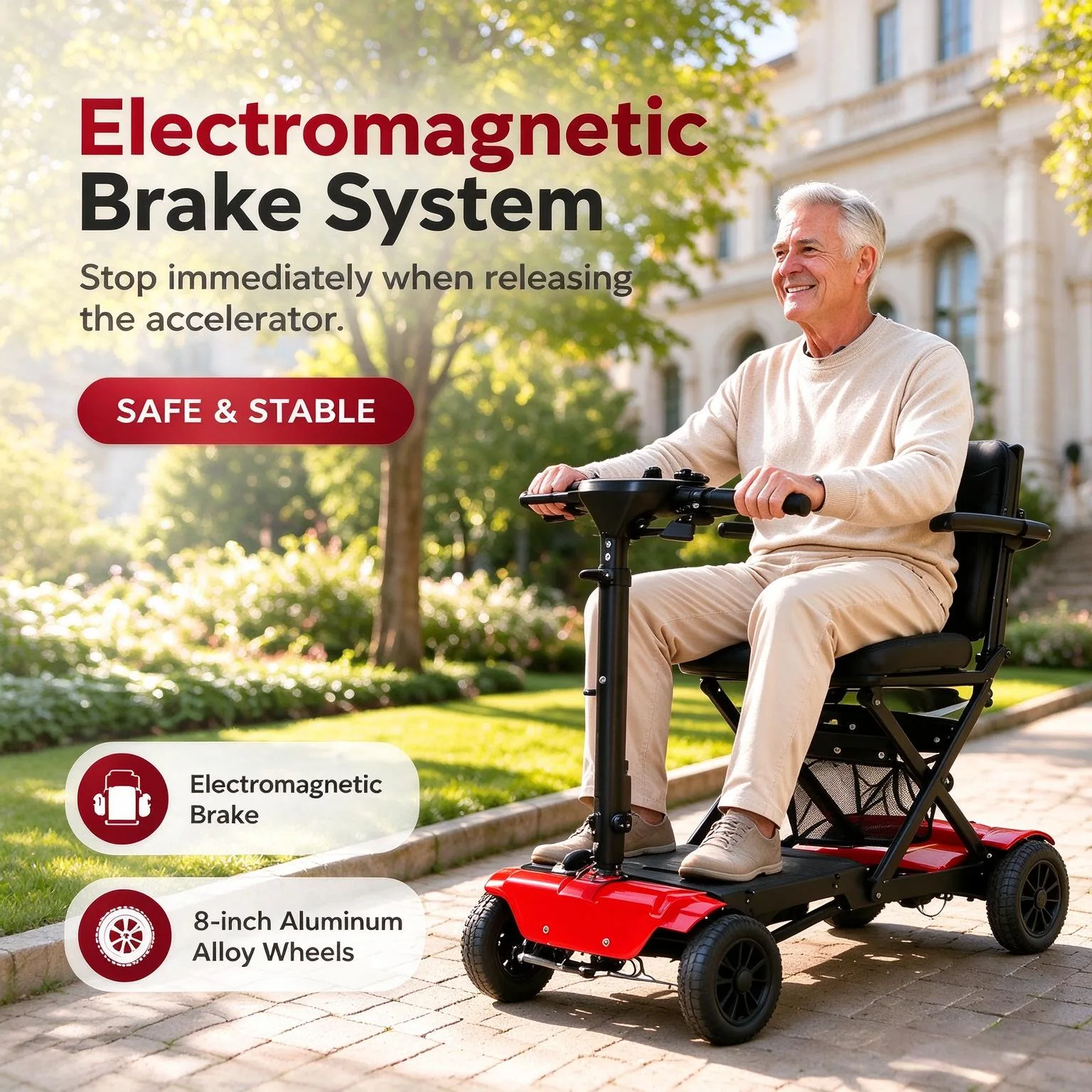

Sourcing an electric mobility scooter for resale looks simple from a product page. The photos are clean, the specs are listed, and the price seems workable. The hard part begins after the first container arrives — when certification gaps, range disputes, or missing spare parts turn a good margin into a refund headache.
For importers building or expanding a mobility scooter lineup, the questions asked before signing matter more than the questions asked after. Here are ten that separate a smooth import from a costly one.
1. What certifications does the scooter actually carry?
Certifications are the gatekeeper for legal resale in most markets. For an electric mobility scooter, CE marking is the baseline for Europe, UKCA for the United Kingdom, and various local approvals apply elsewhere. Ask for the actual certificate numbers and the test lab, not just a logo on the product photo. A supplier that cannot produce documentation will become your problem at the border.
2. What is the real driving range, and under what conditions?
Range figures on spec sheets are often best-case: a light rider, flat ground, new battery, moderate speed. Ask for range at the maximum load and on mixed terrain. A scooter rated for 35 km may deliver 20–25 km in real use. Knowing the realistic number protects you from end-user complaints and return requests.
3. What battery chemistry and capacity are used?
Battery type drives weight, price, and shipping rules. Lithium packs are lighter and longer-lived but need UN38.3 and MSDS documentation for sea and air freight. Lead-acid is cheaper and robust but heavy. For an electric mobility scooter, clarify capacity in amp-hours and voltage, and confirm whether the pack is removable for travel or service.
4. What is the maximum load, and what do you recommend as a safe working load?
A stated 150 kg maximum is not the same as a comfortable daily load. Ask what the manufacturer recommends for continuous use, and match that against your target users. Overloading shortens motor and frame life and creates safety risk — both of which land on the importer eventually.
5. Is it foldable, and what are the folded dimensions?
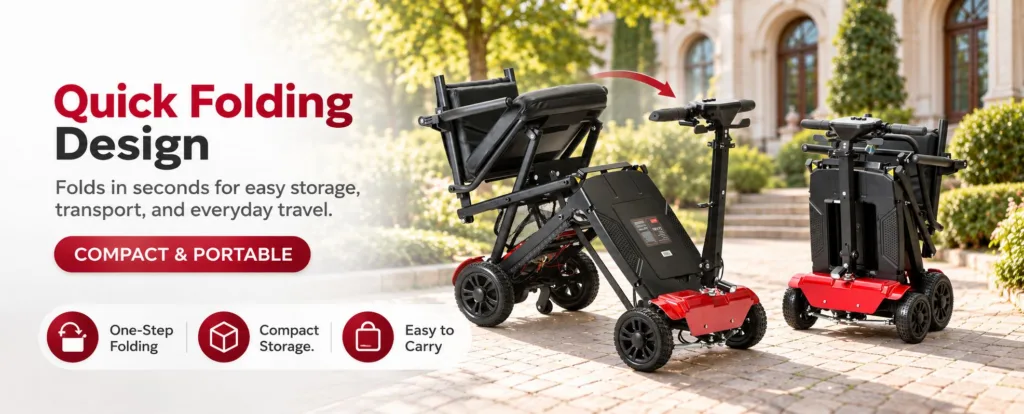
Portability is a major selling point for scooters, but “foldable” covers a wide range. Measure the folded size and weight, and test how many steps the fold takes. A model that folds in one motion fits car boots and cruise cabins; a complex fold frustrates the very users who need simplicity.
6. What are the lead time and minimum order quantity?
Lead time affects your ability to restock before peak seasons, and MOQ affects how much capital sits in inventory. For an electric mobility scooter program, ask whether trial orders under ten units are possible to validate the market, and what the production window looks like at order volumes of 100, 500, and 1,000 units.
7. What warranty and spare-part support is offered?
Mobility products fail in predictable places: batteries, controllers, tires, and joysticks. Confirm the warranty period, what it covers, and — critically — whether spare parts are stocked and shipped separately from full units. An importer who cannot get a replacement controller six months later loses customers permanently.
8. What OEM and ODM customization is available?
Most importers are not buying generic stock; they are building a brand. Ask about logo printing, frame and seat colors, packaging design, multilingual manuals, and whether the supplier can adjust configuration to your market. The right electric mobility scooter partner treats customization as standard, not a favor.
9. What are the motor specs and climbing ability?
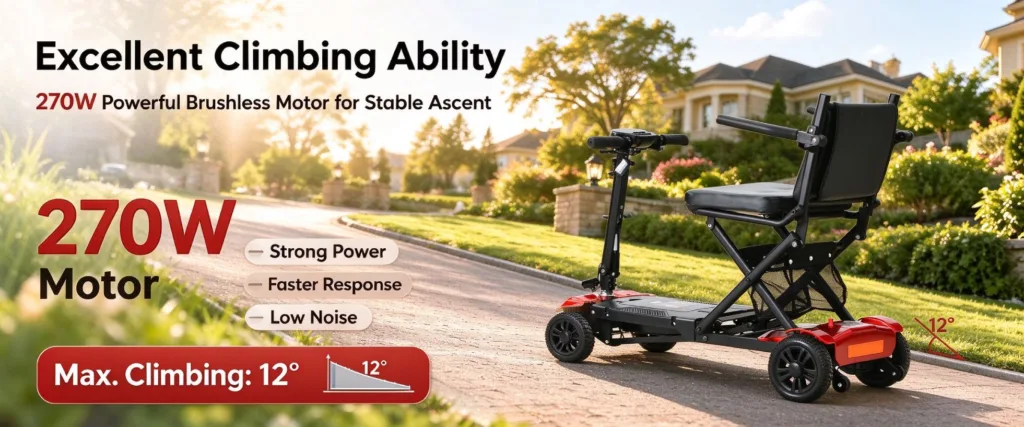
Speed and climbing angle determine where the scooter is usable. A 350W motor suits flat urban use; an 800W motor handles hills and heavier users. Ask for maximum speed, gradeability in degrees, and turning radius — the last one matters for indoor and store use more than buyers expect.
10. What export documentation and shipping support do you provide?
The product is only half the shipment. Confirm the supplier handles commercial invoices, packing lists, battery documentation, and coordination through ports such as Ningbo or Shanghai. A partner experienced in export reduces the chance of a container stuck in customs over a missing paper.
Red flags to watch for
Beyond the answers themselves, watch how a supplier responds:
- Vague certification talk. “We can do CE if you need it” is not the same as “here is our valid certificate.”
- Range without conditions. If a supplier quotes range with no mention of load or terrain, treat it as optimistic.
- No spare-part program. A factory that only sells complete units is a risk for after-sales.
- Reluctance to send a sample. A serious exporter should support a small trial order before a full container.
- Generic photos. Stock images that appear on multiple suppliers’ sites suggest limited real manufacturing depth.
Build a simple supplier scorecard
Rather than trusting memory across multiple calls, score each candidate on the answers above. A simple table works:
| Evaluation area | What good looks like | Red flag |
| Certifications | Valid certificate numbers provided | “Can do if needed” |
| Range honesty | Range given with load and terrain | Single best-case number |
| Battery docs | UN38.3 + MSDS ready | “We’ll figure it out” |
| Spare parts | Stocked, shippable separately | Full units only |
| Trial order | Supported under 10 units | Minimum one container |
| Export docs | Handled by supplier | Buyer responsible |
After scoring two or three factories, the right partner usually stands out without much debate.
Negotiating the first trial order
Once a supplier passes the questions, the trial order is where trust is built. Keep the first batch small — under ten units where possible — and use it to validate three things: that the product matches the spec sheet, that the documentation clears your customs, and that after-sales communication is real, not just pre-sale enthusiasm. A supplier who supports a small trial order confidently is signaling confidence in their own product.
Putting the answers to work
These ten questions are not a checklist to wave at a supplier; they are a conversation that reveals how seriously a factory treats export business. A strong manufacturer answers confidently and with documentation. A weak one hedges, redirects, or promises to “check and reply later” on basics.
For importers, the goal is not to find a perfect scooter on the first call. It is to find a supplier whose answers hold up after the container lands. Ask these ten before you source, and the second container will be far easier than the first.