


The mobility industry has changed shape over the last decade. Where electric wheelchairs were once heavy, clinical-looking devices reserved for hospital discharge or full-time users, today’s market is driven by independence, travel, and everyday usability. At the center of that shift is one material choice that keeps coming up in buyer conversations: the aluminum alloy electric wheelchair.
This article looks at why lightweight frames built from aluminum alloy have moved from a niche premium option to a mainstream expectation — and what that means for distributors, importers, and care providers choosing products for their markets.

Weight is no longer a footnote
For years, the conversation around electric wheelchairs centered on motor power, battery life, and load capacity. Those still matter. But for the people who actually use and transport these devices, weight is often the deciding factor.
A lighter chair is easier for a family member to lift into a car trunk. It is easier for a caregiver to maneuver up a step or onto a ramp. And for the user, a lighter frame usually means a smaller, more agile device that feels less like medical equipment and more like personal mobility.
An aluminum alloy electric wheelchair typically weighs meaningfully less than a comparable carbon steel model. In practice, alloy frames often land in the 20–30 kg range including the battery, while steel equivalents sit higher. That difference is felt every single day by the people handling the chair — and daily friction is exactly what drives returns and bad reviews.
What aluminum alloy actually delivers
Aluminum alloy is not a single material but a family of alloys tuned for strength and low weight. For mobility products, the relevant properties are:
- Strength-to-weight ratio. Aluminum carries load well without the mass penalty of steel.
- Corrosion resistance. Unlike steel, it does not rust when its surface coating is scratched, which matters for outdoor and humid-climate use.
- Rigidity with less material. A well-designed alloy frame can feel solid while using less metal.
- Recyclability. Aluminum is widely recycled, a point that matters to some public tenders and eco-conscious buyers.
None of this means alloy is universally “better.” It means alloy solves a specific set of problems — portability, daily handling, and climate durability — that are increasingly the problems buyers care about most.
The portability argument
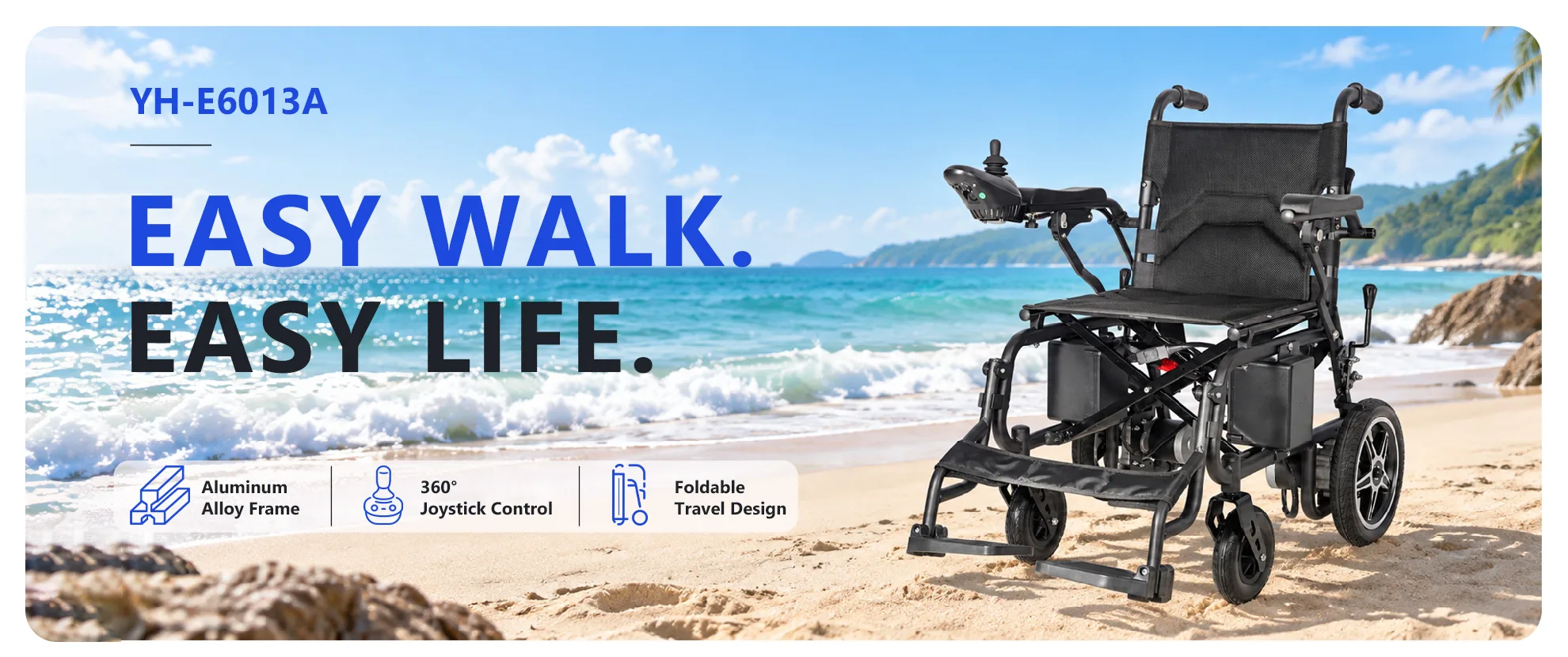
Portability is where the aluminum alloy electric wheelchair pulls clearly ahead. Many models fold in a single motion, collapsing to a size that fits a car boot or a cruise-ship cabin. For users who travel, visit family, or simply move between home and a care facility, that fold-and-go capability changes what is possible in a day.
Air travel deserves a separate note. Lithium batteries — common in lightweight alloy chairs — are generally permitted in cabin baggage under most airline rules, while larger sealed lead-acid packs are frequently restricted. A lighter chair with a removable lithium battery is therefore far easier to take on a plane, though buyers should always confirm the specific airline and destination regulations before promising this to end users.
Balancing weight against load capacity
A common worry is that a lighter chair must mean a weaker chair. That is not the case with modern designs. Many alloy frames still support loads of 136 kg to 150 kg, covering the large majority of adult users. The engineering challenge is real, but it has been solved in current-generation products.
The honest trade-off is at the extreme end: for users above the standard load range, or for very rugged daily outdoor use, a heavier carbon steel frame may still be the safer platform. The point is that aluminum alloy now covers most of the market, not just the lightweight niche.
Battery choice compounds the weight story
Frame material is only half the weight equation. The battery matters just as much.
Lead-acid batteries are cheap and robust but heavy. Lithium battery packs cost more but cut several kilograms and charge faster. An aluminum alloy electric wheelchair paired with a lithium pack is where the lightweight category really delivers — the two choices reinforce each other.
For importers, this is also a compliance question. Lithium batteries require UN38.3 testing and MSDS documentation for international shipping. A supplier that handles this paperwork cleanly removes a real headache from the import process.
How the materials compare
| Material | Typical weight | Cost | Durability | Best for |
| Aluminum alloy | Low (20–30 kg) | Mid–high | High, rust-resistant | Travel, daily portable use |
| Carbon steel | High (30 kg+) | Low–mid | High, but rusts if scratched | Heavy-duty, value segments |
| Carbon fiber | Lowest | Very high | High | Premium niche, weight-critical |
This table is a generalization, but it captures why alloy sits in the sweet spot for most buyers: lighter than steel, far cheaper than carbon fiber, and durable enough for daily life.
Maintenance, longevity, and total cost of ownership
Light weight is not just a handling benefit; it affects the lifetime cost of the product. A lighter chair is less stressful on hinges, latches, and folding mechanisms because less mass is moving and flexing with every use. It is also less likely to be dropped or mishandled during transport, which is a leading cause of frame damage in the field.
Corrosion resistance adds another dimension. In coastal or humid markets, steel frames that lose their coating can rust within a season, triggering warranty claims and reputational damage. Aluminum’s natural oxide layer protects it without depending on a perfect paint job. For importers calculating total cost of ownership across a product’s service life, these factors often outweigh the higher upfront material cost.
Why the market is moving this way
Several forces push demand toward lightweight alloy chairs:
- Aging populations in many markets want to stay active, not stay home.
- Home and community care is replacing long institutional stays, so devices must work in real homes, not just wards.
- Travel and leisure for older adults is a growing segment that expects portable gear.
- Retail and e-commerce buyers compare specs directly, and “net weight” is a visible, comparable number.
When a buyer can read “25 kg” next to one chair and “38 kg” next to another, the lighter option wins more often than not — assuming the load and range specs meet their needs.
Communicating the value to channels and users
For a distributor or private-label brand, the job is not only to source a good alloy chair but to explain why it matters. The strongest messaging is concrete: “one person can lift it into a car,” “no rust in humid climates,” “fits in a cruise cabin.” These are lived benefits, not spec-sheet abstractions.
Training retail staff and writing listing copy around daily scenarios — the school run, the airport, the family trip — converts the technical advantage of an aluminum alloy electric wheelchair into a purchase decision. Buyers respond to outcomes, and light weight is an outcome they feel immediately.
What buyers should check
If you are evaluating an aluminum alloy electric wheelchair for your market, look beyond the headline weight:
- Confirm the load rating against your typical user profile.
- Check folded dimensions, not just weight, for car and travel use.
- Ask about battery chemistry and whether removable packs are available.
- Verify certifications (CE, UKCA, and relevant local marks).
- Confirm spare-part availability for the frame and electronics.
Implications for brands
For distributors, stocking lightweight alloy models is no longer optional. They sit at the intersection of the fastest-growing user needs: independence, portability, and dignity of use.
For private-label brands, aluminum alloy frames also support the customization buyers expect — color, logo, seat style, and packaging can all be tailored without changing the core engineering. That makes the category attractive for building a differentiated product line rather than competing purely on price.
The bottom line
The rise of the aluminum alloy electric wheelchair is not a fad driven by material fashion. It is a response to how mobility products are actually used today: lifted, folded, carried, traveled with, and lived with. Lighter frames make that daily reality easier, and the technology has matured enough to keep load capacity and durability where buyers need them.
For any importer or brand planning a mobility lineup, the question is no longer whether to carry a lightweight alloy chair, but which one fits your market best.