
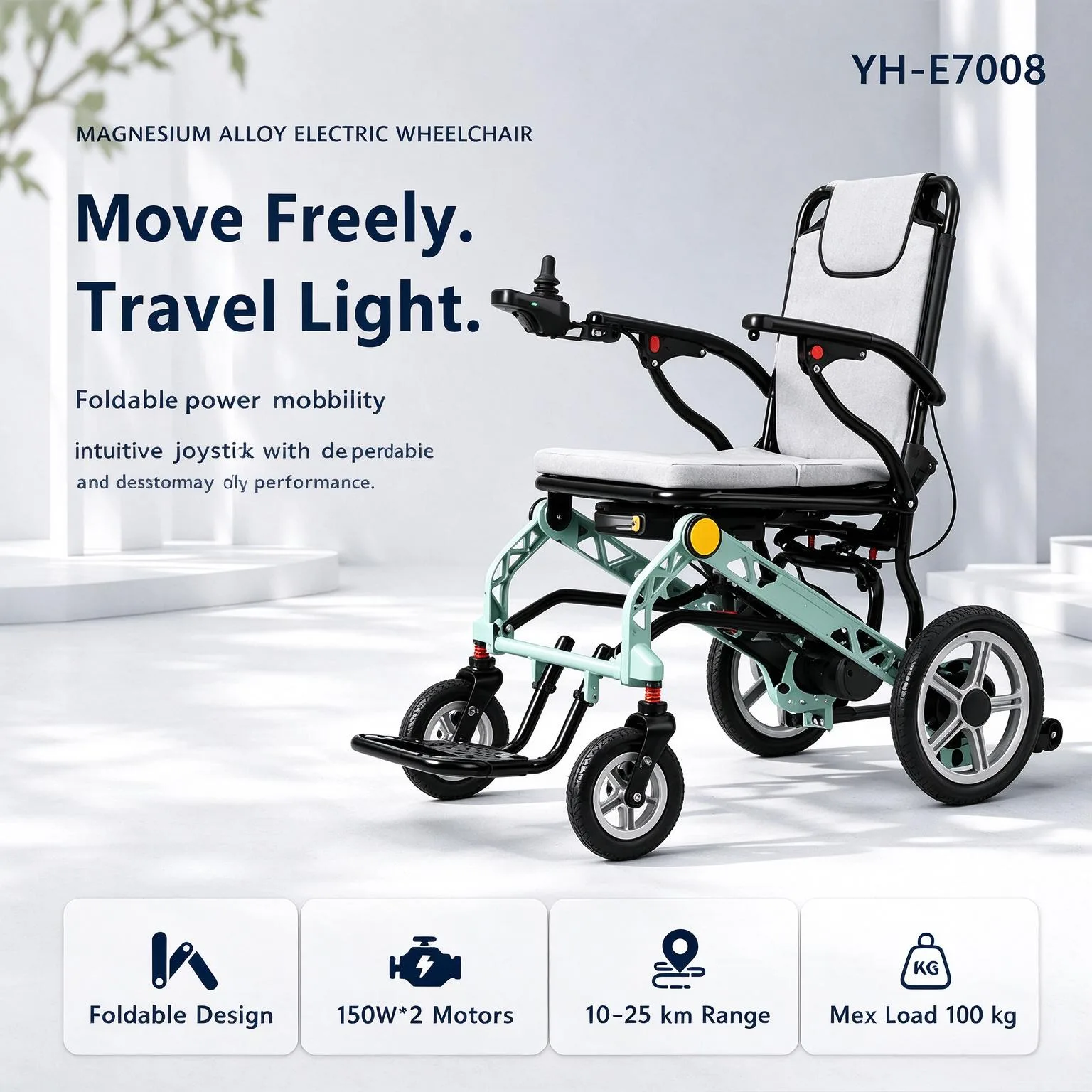

Lightweight mobility is no longer just a convenience—it is a key purchasing factor for users, caregivers, retailers, and distributors. A new generation of electric wheelchairs built with magnesium alloy is reshaping expectations by combining ultra-low weight, strong vibration damping, and premium design appeal. With magnesium weighing far less than aluminum and steel, these models can make lifting, transport, and daily maneuvering significantly easier. This guide explains the material advantages, core specifications, durability markers, and commercial considerations buyers should assess before selecting a model. Whether sourcing for retail, rehabilitation supply, or end-user recommendation, understanding these details helps identify products that deliver both performance and long-term value.
Why Choose a Magnesium Alloy Electric Wheelchair
The mobility aid industry is undergoing a significant transformation driven by advancements in materials science. For decades, steel and aluminum dominated the market, but the introduction of the magnesium alloy electric wheelchair has redefined expectations for weight, durability, and user independence.
Procuring these advanced devices requires a solid understanding of their material properties and market positioning. For B2B buyers, transitioning to magnesium alloy models presents a strategic opportunity to capture a premium segment of the healthcare and rehabilitation market.
Key Benefits for Users
Magnesium is the lightest structural metal available, boasting a density of just 1.74 g/cm³. This makes a magnesium alloy electric wheelchair approximately 33% lighter than its aluminum counterparts and up to 75% lighter than traditional steel models. For the end-user, this drastic reduction in weight translates to effortless maneuverability and significantly reduced physical strain when lifting the device into a vehicle.
Beyond weight savings, magnesium possesses an exceptional damping capacity, absorbing shocks and vibrations from uneven terrain far more effectively than aluminum. This natural shock absorption reduces user fatigue during prolonged use, ensuring a smoother, more comfortable ride on both standard pavements and indoor surfaces.
Commercial Advantages for Buyers
From a retail and distribution perspective, magnesium alloy models command a premium positioning. While standard aluminum chairs might face intense price competition, magnesium wheelchairs often retail in the $1,200 to $2,800 range, providing distributors with healthier profit margins.
The growing aging population and increased demand for travel-friendly mobility solutions are accelerating market adoption. Buyers who stock these lightweight models can effectively target active seniors, frequent travelers, and users seeking aesthetic, high-tech alternatives to clinical-looking medical equipment.
What Defines a High-Quality Model

Evaluating a magnesium alloy electric wheelchair requires looking past the sleek exterior to examine the engineering that guarantees long-term reliability. High-quality models synthesize advanced metallurgy with efficient electronic systems.
A robust evaluation framework focuses on structural integrity, power delivery, and user-centric ergonomics, ensuring the device performs safely under daily stress.
Frame Material and Durability
The hallmark of a premium frame is the use of die-cast magnesium alloy, which eliminates the need for extensive welding. Welded joints are common failure points in mobility devices; seamless die-casting ensures uniform stress distribution and superior structural integrity. High-quality frames typically exhibit a tensile strength exceeding 220 MPa, ensuring they can withstand daily impacts without warping.
| Feature | Magnesium Alloy | Aluminum Alloy | Carbon Steel |
|---|---|---|---|
| Density (g/cm³) | 1.74 | 2.70 | 7.85 |
| Relative Weight | Ultra-Light | Light | Heavy |
| Vibration Damping | Excellent | Moderate | Poor |
| Corrosion Resistance | High (with coating) | High | Low (prone to rust) |
Core Technical Specifications
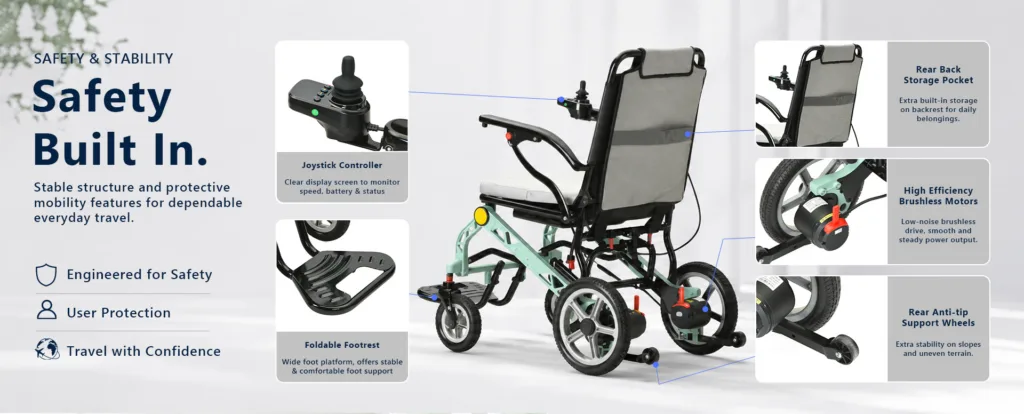
The drivetrain is just as critical as the frame. Industry-leading models utilize dual brushless DC motors, usually rated at 200W to 250W each. These motors offer higher efficiency, quieter operation, and a longer lifespan compared to brushed alternatives.
Airline-approved lithium-ion batteries—typically configured at 24V with capacities ranging from 10Ah to 20Ah—power these motors. A standard 12Ah battery setup provides a reliable travel range of 15 to 20 kilometers per charge, maintaining a balance between total wheelchair weight and practical daily usability.
Comfort and Usability Features
User safety and comfort are non-negotiable. Top-tier models integrate intelligent electromagnetic braking systems that engage instantly when the joystick is released. A high-quality controller and braking system ensure a stopping distance of less than 1.5 meters, even at maximum speeds of 6 km/h.
Additionally, features such as breathable memory-foam seating, flip-up armrests for easy side transfers, and anti-tip rear wheels are standard on premium builds. These elements ensure that the wheelchair is not only safe but also highly adaptable to the user’s daily living requirements.
How to Compare Different Models
When sourcing a magnesium alloy electric wheelchair, distributors must compare specifications rigorously to match products with their target demographic. Not all lightweight wheelchairs are engineered for the same use cases.
By analyzing weight-to-load ratios and folding mechanisms, buyers can curate a product lineup that spans from ultra-portable travel chairs to robust, everyday mobility solutions.
Weight, Range, and Load Capacity
The primary metric for comparison is the balance between the chair’s net weight and its maximum load capacity. An elite magnesium wheelchair typically weighs between 13 kg and 16 kg (excluding the battery) while safely supporting a standard load of 100 kg.
For heavier-duty applications, reinforced magnesium frames can support up to 120 kg to 150 kg, though this increases the base weight slightly. Comparing these ratios helps buyers determine if a model is better suited for petite users traveling frequently or larger individuals requiring daily stability.
| Specification | Ultra-Portable Model | Standard Daily Model | Heavy-Duty Model |
|---|---|---|---|
| Net Weight (No Battery) | < 13 kg | 14 – 16 kg | 17 – 19 kg |
| Max Load Capacity | 100 kg | 120 kg | 150 kg |
| Motor Power | 2 x 150W | 2 x 250W | 2 x 300W |
| Average Range | 12 – 15 km | 15 – 20 km | 20 – 25 km |
Foldability and Portability
Portability hinges on the folding mechanism. The most competitive models feature a one-second, single-step folding design that reduces the wheelchair to a compact footprint, often around 60 x 30 x 75 cm. This compactness is crucial for users who need to store the device in standard car trunks or navigate narrow storage spaces.
While some advanced models offer remote-controlled automatic folding, manual folding remains the most reliable and lightweight option. Buyers should physically test the locking mechanisms to ensure they remain rigid when unfolded and do not loosen over time.
Testing Before Bulk Purchase
Before committing to a bulk purchase, physical sample testing is mandatory. Distributors should subject samples to rigorous evaluation, including incline testing on slopes of at least 8 to 12 degrees to verify motor torque and anti-tip stability.
Buyers should also inquire about the manufacturer’s internal lifecycle testing. Reputable factories subject their frames to a minimum of 200,000 cycle fatigue tests to guarantee that the die-cast magnesium will not suffer from micro-fractures over years of continuous use.
What Importers and Distributors Should Check
Partnering with a proven manufacturer mitigates supply chain risks and guarantees consistent product quality. For medical and mobility devices, supplier vetting is just as important as product specifications.
Working with an established entity ensures buyers receive comprehensive support from production through final delivery, minimizing the complexities of international trade.
Supplier Qualifications
Supplier qualifications are the foundation of a reliable B2B relationship. A reputable manufacturer must hold international quality management certifications such as ISO 13485 for medical devices, alongside CE certification for the European market or FDA registration for the US.
Ningbo Youhuan Automation Technology Co., Ltd. exemplifies this standard, bringing 15 years of production and trading experience in rehabilitation supplies. Their track record of over 300,000 units sold across 200 countries provides buyers with verifiable proof of manufacturing excellence and widespread market acceptance.
OEM and Wholesale Capabilities
Distributors often require OEM services to build their own brand equity. High-quality suppliers offer extensive customization, including bespoke frame colors, branded upholstery, and tailored software settings for the joystick controllers.
Flexibility in order volume is equally important. While standard Minimum Order Quantities (MOQs) for custom branding might range from 50 to 100 units, industry leaders like Ningbo Youhuan provide flexible trial orders. This allows new distributors to test market reception with smaller batches before committing to large-scale wholesale contracts.
Compliance, Packaging, and Shipping
Shipping electric wheelchairs involves strict compliance, primarily due to the lithium-ion batteries. Suppliers must provide valid UN38.3 and MSDS (Material Safety Data Sheet) certifications to ensure the batteries clear air and sea freight customs without delays.
Packaging must withstand the rigors of international logistics. Buyers should verify that cartons meet ISTA 1A drop test standards. For container planning, a standard 20-foot shipping container can typically hold between 150 and 200 folded magnesium alloy wheelchairs, allowing buyers to optimize freight costs per unit.
How to Make the Final Buying Decision
Finalizing a procurement strategy requires synthesizing product data, supplier capabilities, and local market demands. A structured approach minimizes financial exposure and ensures a high return on investment.
By aligning the purchasing decision with specific buyer profiles and implementing strict risk control measures, businesses can successfully integrate magnesium wheelchairs into their portfolios.
Step-by-Step Selection Process
The selection process should follow a strict sequence. First, audit the local regulatory requirements for mobility aids to ensure the chosen specifications comply with regional healthcare standards. Second, order a mixed sample batch to test different motor and battery configurations.
Third, evaluate the supplier’s communication, lead times, and documentation during this sample phase. Finally, negotiate a contract that clearly outlines production lead times—typically 25 to 40 days for bulk orders—and establishes clear quality acceptance criteria prior to shipment.
Best Buyer Profiles
Different buyer profiles will prioritize different aspects of the magnesium alloy electric wheelchair. Online Direct-to-Consumer (D2C) brands should focus on ultra-lightweight models with striking aesthetics and seamless unboxing experiences to minimize return rates.
Conversely, rehabilitation centers and specialized medical equipment providers should prioritize heavy-duty magnesium models with wider seating, higher load capacities, and extensive adjustability to accommodate complex patient needs.
Value and Risk Control
Controlling risk involves securing robust warranty terms and establishing a reliable spare parts pipeline. A standard industry warranty should cover the magnesium frame for 3 to 5 years, while motors, batteries, and controllers should carry at least a 1-year guarantee.
To maintain a defect rate below the industry benchmark of 1%, buyers should negotiate an agreement where the manufacturer provides 1% to 2% free spare parts (such as joysticks and tires) with every bulk container order. This proactive approach ensures rapid local after-sales support, protecting the distributor’s brand reputation.
Key Takeaways
- Choose magnesium alloy models when weight reduction is a priority, as magnesium’s 1.74 g/cm³ density makes these wheelchairs about 33% lighter than aluminum alternatives.
- Prioritize die-cast magnesium alloy frames because they reduce reliance on welded joints and improve structural integrity under daily stress.
- Look for frames with tensile strength above 220 MPa to ensure the wheelchair can handle routine impacts without warping.
- Evaluate ride comfort as well as weight, since magnesium’s vibration-damping capacity can reduce fatigue on uneven surfaces.
- For dependable performance, select models with dual brushless DC motors rated around 200W to 250W each.
- Position magnesium alloy electric wheelchairs as premium products, with typical retail prices ranging from $1,200 to $2,800.
Frequently Asked Questions
Why are magnesium alloy electric wheelchairs lighter than aluminum models?
Magnesium has a density of about 1.74 g/cm³, compared with aluminum at 2.70 g/cm³. This allows magnesium alloy electric wheelchairs to be roughly 33% lighter than comparable aluminum models.
Are magnesium alloy electric wheelchairs durable enough for daily use?
Yes, high-quality models use die-cast magnesium alloy frames that distribute stress evenly and reduce weak welded joints. Premium frames may offer tensile strength above 220 MPa for everyday impact resistance.
What user groups are best suited to magnesium alloy electric wheelchairs?
They are especially suitable for active seniors, frequent travelers, and users who need a lightweight chair that is easier to lift, maneuver, and store without sacrificing comfort.
How do magnesium alloy wheelchairs improve ride comfort?
Magnesium has strong vibration-damping properties, helping absorb shocks from pavements, indoor surfaces, and uneven ground. This can reduce fatigue during longer periods of use.
What motor specifications should buyers look for?
A reliable model typically uses dual brushless DC motors rated around 200W to 250W each. This setup supports efficient power delivery and dependable daily mobility.