
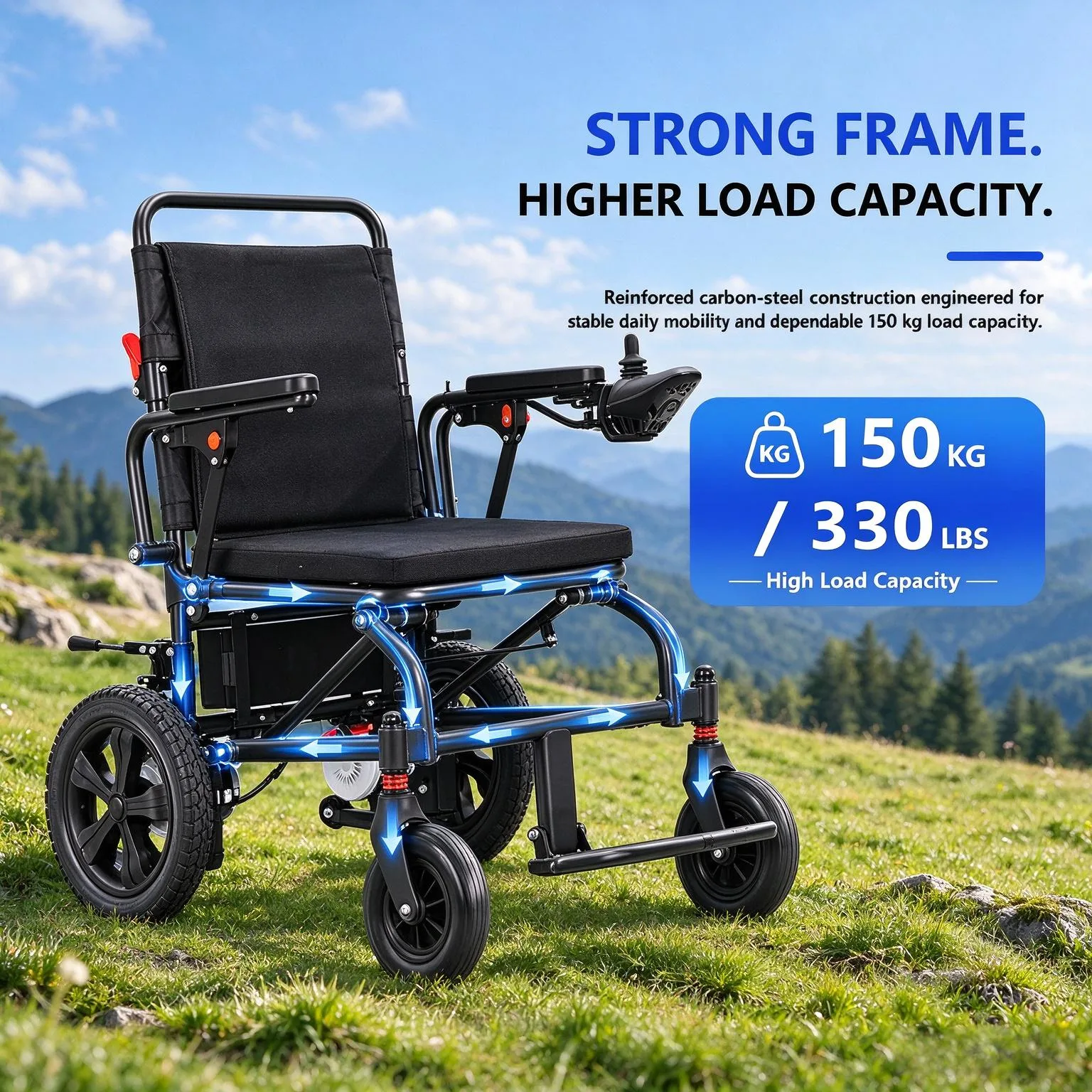

Two materials dominate the electric wheelchair frame today: carbon steel and aluminum alloy. Both are proven. Both ship in large volumes. Yet they serve different buyers, different price points, and different daily realities. For a brand or importer building a wheelchair lineup, choosing between them is less about which is “better” and more about which fits the market you actually sell into.
This article breaks down the real trade-offs so the decision is practical, not ideological.
Start with the end user, not the material
The first question is never “steel or alloy?” It is “who will use this, and how?” A chair that spends its life in a care home corridor faces different demands than one folded into a car three times a week. The material should follow the use case.
A carbon steel electric wheelchair is the workhorse. It is heavier, tougher, and usually cheaper to produce. An aluminum alloy electric wheelchair is the traveler — lighter, corrosion-resistant, and positioned at a higher tier.
Carbon steel: the case for weight and value
Carbon steel’s main advantage is simple physics. It is dense and strong, which lets manufacturers build rigid frames that shrug off daily abuse. For users above the standard load range, or for environments where the chair is dropped, bumped, and left in humidity, steel earns its keep.
The trade-offs are weight and corrosion. A steel frame weighs more, which matters for anyone lifting it, and it can rust if the coating is scratched and not treated. For value-segment buyers and heavy-duty use, those trade-offs are accepted. For portable-use buyers, they are dealbreakers.
Aluminum alloy: the case for portability
An aluminum alloy electric wheelchair wins on the factors that drive most modern purchases: low weight, no rust, and a premium feel. A 25 kg alloy chair is dramatically easier to load, store, and live with than a 35 kg steel one. For active seniors, travelers, and home-care users, that difference is the product.
The cost is higher material and a ceiling on extreme-load rigidity. Alloy frames handle standard loads well, but for the very heaviest users or roughest terrain, steel remains the more conservative choice.

Side-by-side comparison
| Factor | Carbon Steel Electric Wheelchair | Aluminum Alloy Electric Wheelchair |
| Frame weight | Higher | Lower |
| Material cost | Lower | Higher |
| Load capacity | Strong at extremes | Strong for standard users |
| Corrosion | Rusts if scratched | Naturally resistant |
| Portability | Limited | Excellent |
| Price positioning | Value segment | Mid–premium |
Neither column is “wrong.” They describe two different products for two different buyers.
Reading the spec sheet correctly
Frame material is only one line on a specification document, and it is easy to misread. A “carbon steel electric wheelchair” listed at 32 kg usually means total weight with the battery; the frame alone is lighter. Likewise, an “aluminum alloy electric wheelchair” at 25 kg may use a lithium pack that itself weighs several kilograms. Always compare like for like — total weight with the same battery type — before drawing conclusions. Load rating, folded size, and turning radius matter as much as the metal in the frame.
Positioning by market segment
Use the material to signal the segment:
- Value and institutional: Steel suits budget buyers, care homes, and tenders where price and durability lead.
- Active and aging-in-place: Alloy suits seniors living independently, travelers, and retail buyers comparing specs online.
- Premium private label: Alloy supports branding, color, and configuration customization that justifies a higher retail price.
A balanced lineup often carries both — steel for volume and alloy for margin.
Logistics and total cost
Shipping weight is where steel quietly costs more. Heavier chairs mean higher freight per unit and fewer units per container. Alloy’s lighter frame can improve container utilization, partly offsetting its higher material cost. For importers moving volume, that logistics math matters as much as the factory price.
There is also the after-sales angle. Lighter chairs are less likely to be damaged in handling and easier for end users to manage, which can reduce the return and complaint rate that eats into net margin.
Common mistakes importers make
A few patterns show up repeatedly when brands pick the wrong frame:
- Chasing the lowest factory price and ignoring freight, returns, and warranty cost.
- Assuming one material fits every market, when regional preferences differ sharply.
- Over-specifying load for a user base that mostly needs portability.
- Ignoring the story the material tells — steel reads “tough and cheap,” alloy reads “modern and light,” and the channel must be able to sell that.
A five-point decision checklist
Before committing, answer these:
- Who is the primary user — a heavy-duty institutional user or an active independent senior?
- Is portability a selling point in your channel, or a non-issue?
- What price tier does your market support?
- How sensitive is freight cost to unit weight at your volumes?
- Does your brand story lean value or modernity?
If most answers point to portability, premium, and modern, the aluminum alloy electric wheelchair is your product. If they point to value, durability, and volume, the carbon steel electric wheelchair is the safer bet.
Warranty and service implications
Material choice also shapes the after-sales story. Steel frames, being simpler and tougher, tend to generate fewer structural warranty claims but more cosmetic rust complaints in humid regions. Alloy frames rarely rust but can be costlier to repair if a major joint is damaged. For importers, the practical takeaway is to match the spare-part strategy to the material: keep touch-up paint and replacement skins for steel lines, and reinforce the frame-warranty messaging for alloy lines where users pay a premium for appearance.
Hybrid and emerging approaches
Some manufacturers now blend the two — an alloy main frame with steel reinforcements at high-stress joints, or a steel chair finished to look like alloy. These hybrids can hit a useful price-performance point, but they also blur the story. If you adopt a hybrid, be precise in how you describe it; buyers who feel misled about materials are unforgiving.
How to choose for your region
Different markets lean different ways. Markets with strong home-care and travel cultures reward alloy. Markets where price sensitivity dominates, or where chairs serve multiple heavy users in shared settings, reward steel. The right answer is the one matching how your customers actually live — not the one that looks better on a spec sheet.
The OEM angle
Both materials support OEM and ODM customization — logo, color, packaging, manuals, and configuration. The difference is the narrative you tell: steel is “built tough and affordable,” alloy is “light, modern, and easy to live with.” Pick the story your channel can sell, then build the product around it.
The bottom line
There is no universal winner between a carbon steel electric wheelchair and an aluminum alloy electric wheelchair. There is only the one that fits your users, your price point, and your channel. Most successful importers stock both, using steel to capture volume and alloy to capture margin and modernity.
Choose by use case first, material second — and the lineup will sell itself.